
Internal Auditor ISO 22000 FSMS
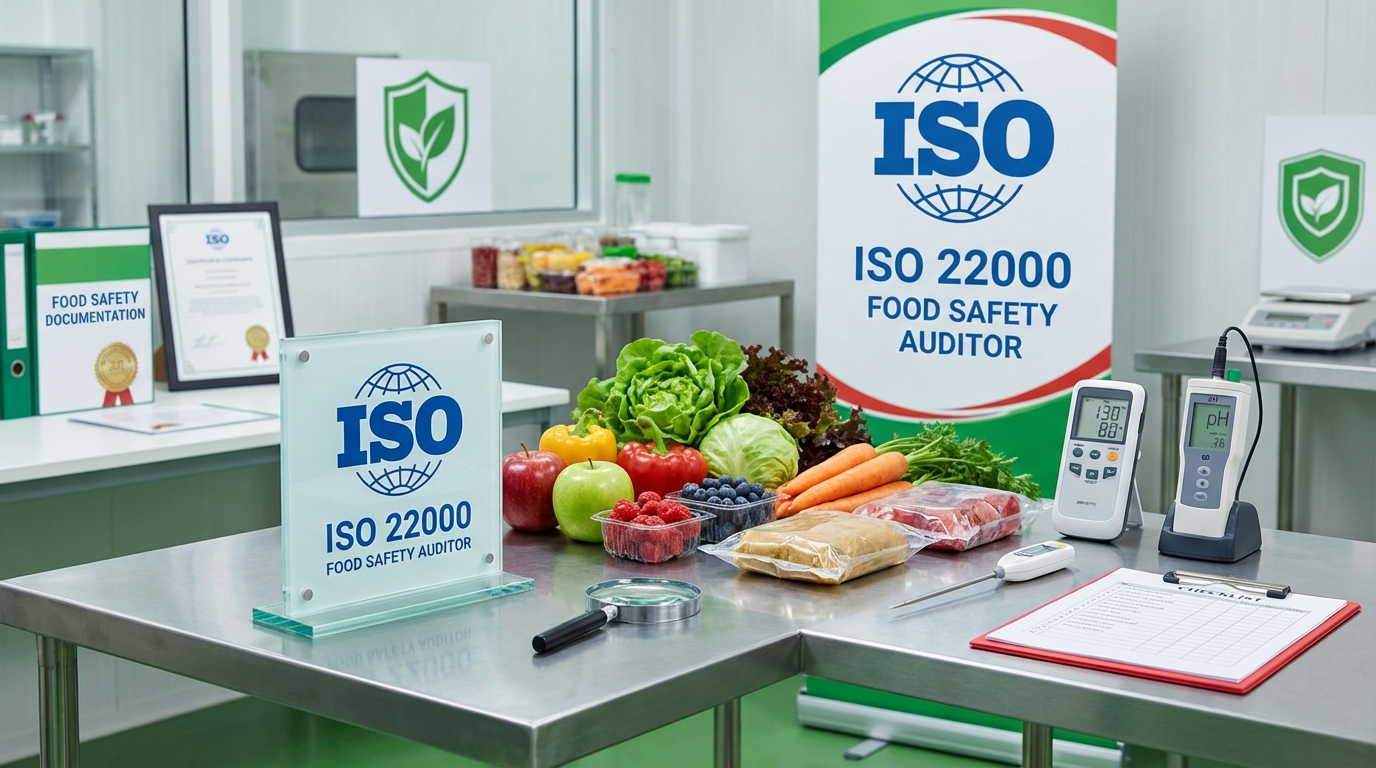
About ISO 22000: The ISO 22000 Food Safety Management System Auditor Course aims to provide participants with the knowledge and skills necessary to conduct effective internal audits to verify the effectiveness of the system’s implementation and achieve food safety in …

Overview
About ISO 22000:
The ISO 22000 Food Safety Management System Auditor Course aims to provide participants with the knowledge and skills necessary to conduct effective internal audits to verify the effectiveness of the system’s implementation and achieve food safety in accordance with this standard. The course includes the following topics:
- Understanding the Standard Requirements:
This section aims to provide a comprehensive understanding of the standards to be audited:
- Basic concepts and principles: The basic principles and concepts of service management and the plan-implement-check-act cycle.
- Definition of the scope and importance of a Food Safety Management System (FSMS).
- Detailed explanation of the requirements of the standard (e.g., context, leadership, planning, support, operation, performance evaluation, and improvement).
- Analysis and planning of safe products: Integrating HACCP (Hazard Analysis and Critical Control Point) principles and their application within the requirements of ISO 22000.
- Programs and Prerequisites (PRPs).
- Identification of risks, opportunities, and actions required to address
- Implementing a Food Safety Management System
- Identifying internal and external stakeholders.
- Roles and responsibilities of senior management.
- Identifying risks and opportunities, setting strategic objectives and policies.
- Resources, competencies, awareness, communication, and document control.
- Operations (Prerequisite Programs (PRPs), Hazard Analysis and Critical Control Points (HACCP).
- Define food process flows, traceability and recall.
- Monitoring and measurement, internal audit, and management review.
- Nonconformities, corrective actions, and continuous improvement in the food safety management system.
- Audit Principles and Guidelines
This section focuses on the methodological foundations of the audit process:
- Audit principles according to the International Standard (19011) Guidelines for Auditing Management Systems.
- The role and responsibilities of the internal auditor according to the standard.
- The competencies and personal characteristics required for the auditor.
- Auditing the IT Service management system
- Assessing and analyzing security threats and risks and selecting audit processes.
- Internal Audit Guidelines:
Discuss this topic based on the empirical foundations of the audit process:
- Preparing the home’s environmental audit program.
- Defining the scope and objectives of the audit.
- Various types of audit items.
- Preparing checklists.
- Organizing the kickoff meeting.
- Evaluating and analyzing surgical procedures and risks.
- Case Studies and Practical Exercises:
- Analyzing Real Scenarios.
- Simulating Audits.
- Discussing Potential Nonconformities.
- Preparing for the Final Exam
- Comprehensive Review of the Material.
- Sample Questions.
- Exam Passing Strategies.
You May Like

Construction Site Management, Inspection & Supervision
Venue: Istanbul /Turkey Price : 4400$ Date: 18- May-26 /22- May-26 For more information, please contact us at: info@makanah.com.sa
Modern Practice in Procurement, Channel Management, Supply Chain and Inventory
Venue: Istanbul /Turkey Price : 4400$ Date: 11- May-26 / 15- May-26 For more information, please contact us at: info@makanah.com.sa
Project Management Professional Program – Preparing for PMP Certificate – Certified Program
Venue: Istanbul /Turkey Price : 4400$ Date: 11- May-26 / 15- May-26 For more information, please contact us at: info@makanah.com.sa
Quality Customer Service for Supervisors & Managers
Venue: Istanbul /Turkey Price : 4400$ Date: 11- May-26 / 15- May-26 For more information, please contact us at: info@makanah.com.sa
Performance Based leadership
Venue: Istanbul /Turkey Price : 4400$ Date: 11- May-26 / 15- May-26 For more information, please contact us at: info@makanah.com.sa
Course Features
- Lecture 0
- Quiz 0
- Duration 3 days
- Skill level All levels
- Language English
- Students 0
- Certificate No
- Assessments Yes