
Lead Auditor ISO 28001- SCSMS
About ISO 28001: The ISO 28001 Supply Chain Security Management System Auditor Course aims to prepare participants to understand the system standards and implement internal audit processes in accordance with this standard. The course includes the following topics: Understanding the …

Overview
About ISO 28001:
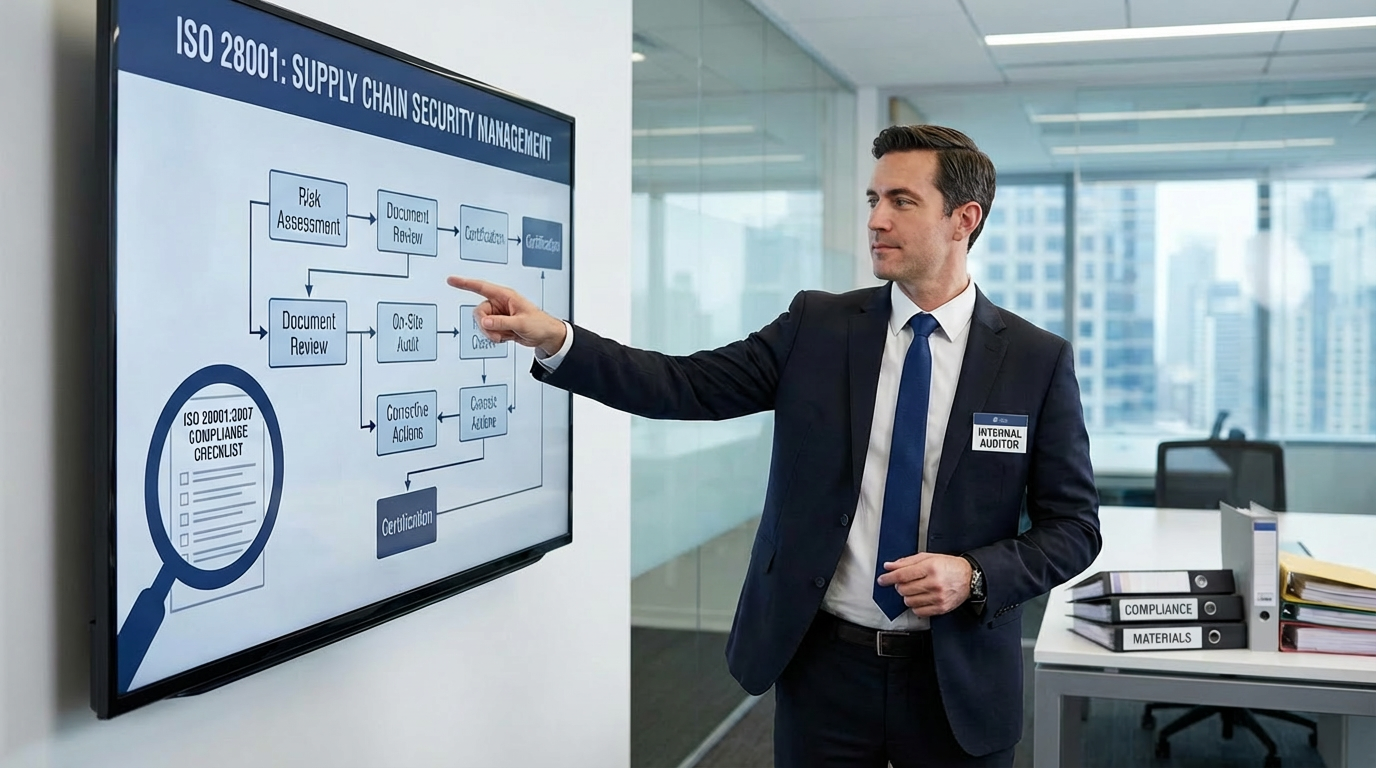
The ISO 28001 Supply Chain Security Management System Auditor Course aims to prepare participants to understand the system standards and implement internal audit processes in accordance with this standard. The course includes the following topics:
- Understanding the Standard Requirements:
This section aims to provide a comprehensive understanding of the standards to be audited:
- The basic concepts and principles of a Supply Chain Security Management System (SCSMS).
- An introduction to the scope and importance of the standard in the context of global security and the supply chain.
- A detailed explanation of the standard requirements (e.g., context, leadership, planning, support, operation, performance evaluation, and improvement).
- Security risk management in the supply chain: How to identify, assess, and address security risks throughout the supply chain.
- Documentation and procedures required for compliance with the standard.
- Implementing a Supply Chain Security Management System
- Planning and implementation of the management system.
- Security risk analysis and assessment.
- Appropriate security controls.
- Integrating the system with other management systems (9001) or (45001).
- Audit Principles and Guidelines
This section focuses on the methodological foundations of the audit process:
- Audit principles according to the International Standard (19011) Guidelines for Auditing Management Systems.
- The role and responsibilities of the internal auditor according to the standard.
- The competencies and personal characteristics required for the auditor.
- Auditing the security management system
- Security review requirements
- Assessing and analyzing security threats and risks and selecting audit processes.
- General Safety:
- Security policy requirements.
- Security planning requirements.
- Compliance with legal and other safety requirements.
- Developing security management programs.
- Preparing emergency plans and procedures.
- Monitoring and measuring safety performance.
- Investigating and acting on security incidents
- Managing security and control records.
- Auditor Competency and Requirements:
- Qualities of a Successful Auditor.
- Ethical Behavior During an Audit.
- Managing Opening and Closing Meetings.
- Dealing with Difficult Cases During an Audit.
- Case Studies and Practical Exercises:
- Analyzing Real Scenarios.
- Simulating Audits.
- Discussing Potential Nonconformities.
- Preparing for the Final Exam
- Comprehensive Review of the Material.
- Sample Questions.
- Exam Passing Strategies.
You May Like

Construction Site Management, Inspection & Supervision
Venue: Istanbul /Turkey Price : 4400$ Date: 18- May-26 /22- May-26 For more information, please contact us at: info@makanah.com.sa
Modern Practice in Procurement, Channel Management, Supply Chain and Inventory
Venue: Istanbul /Turkey Price : 4400$ Date: 11- May-26 / 15- May-26 For more information, please contact us at: info@makanah.com.sa
Project Management Professional Program – Preparing for PMP Certificate – Certified Program
Venue: Istanbul /Turkey Price : 4400$ Date: 11- May-26 / 15- May-26 For more information, please contact us at: info@makanah.com.sa
Quality Customer Service for Supervisors & Managers
Venue: Istanbul /Turkey Price : 4400$ Date: 11- May-26 / 15- May-26 For more information, please contact us at: info@makanah.com.sa
Performance Based leadership
Venue: Istanbul /Turkey Price : 4400$ Date: 11- May-26 / 15- May-26 For more information, please contact us at: info@makanah.com.sa
Course Features
- Lecture 0
- Quiz 0
- Duration 5 days
- Skill level All levels
- Language English
- Students 0
- Certificate No
- Assessments Yes